

Kyrgyz Girl Akhmarcan Regains Her Health at Akdeniz University Hospital
Kyrgyz Girl Akhmarcan Regains Her Health at Akdeniz University Hospital
Kyrgyz Girl Akhmarcan Regains Her Health at Akdeniz University Hospital
Eight-year-old Akhmarcan Nursultanova, from Kyrgyzstan, has successfully recovered from Pulmonary Arteriovenous Malformation (PAVM) following a highly specialized interventional procedure performed at Akdeniz University Hospital. Diagnosed at the age of four and having lost her younger brother to the same rare condition, Akhmarcan now looks forward to returning home, playing freely with her friends, and one day becoming a doctor.
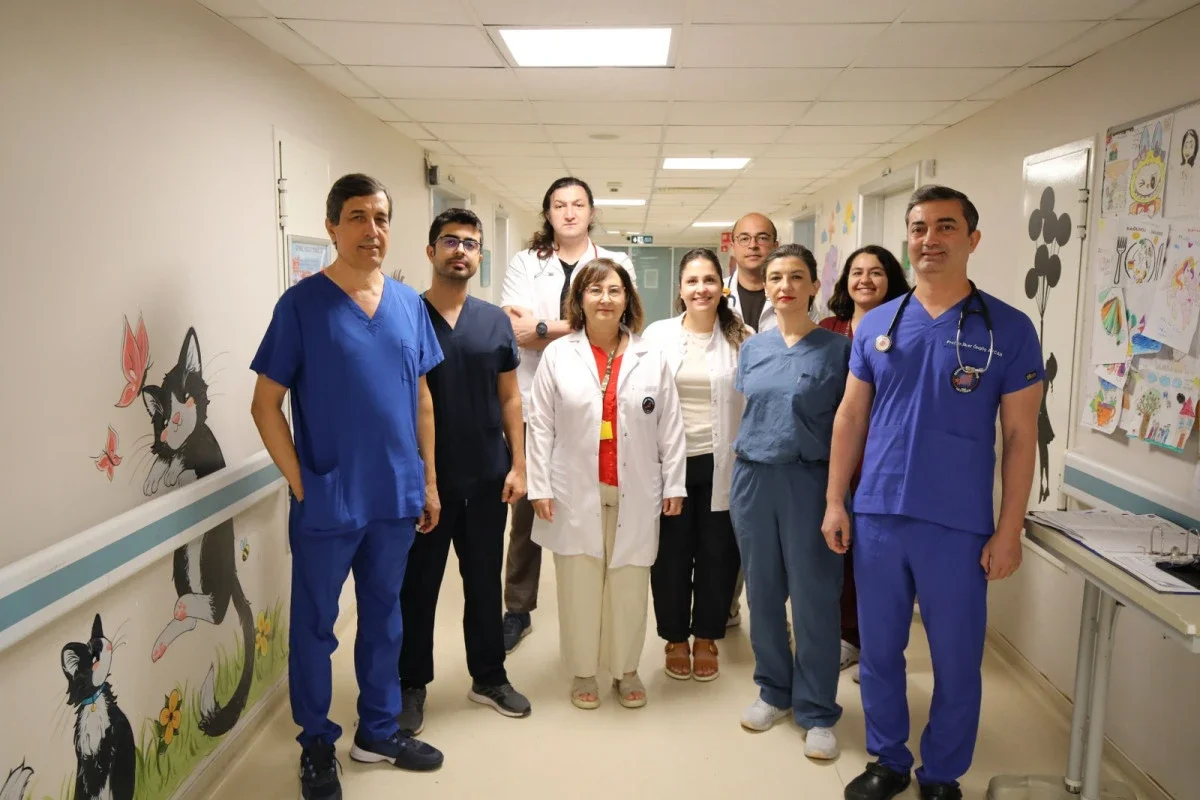
The life-changing procedure was performed by Prof. Dr. Fırat Kardelen and the Pediatric Cardiology team. Using an advanced angiographic catheter-based intervention, the team successfully closed the abnormal blood vessels responsible for the condition. Following treatment, Akhmarcan's oxygen levels improved significantly, allowing her to resume a normal childhood.
A Rare Congenital Vascular Disorder
Prof. Dr. Fırat Kardelen explained that Pulmonary Arteriovenous Malformation (PAVM) is an extremely rare congenital vascular disease.
"This is one of the rarest congenital cardiovascular conditions we encounter. Unlike common congenital heart defects such as septal defects or valve abnormalities, this patient had an abnormal cluster of blood vessels within the lung. Blood with low oxygen levels bypassed the lungs through these abnormal connections and returned directly to the left side of the heart without being oxygenated, resulting in persistently low oxygen saturation throughout the body."
After comprehensive diagnostic evaluation, including computed tomography (CT) imaging in collaboration with the Department of Radiology, the team confirmed the diagnosis. During the catheterization procedure, the abnormal vascular connections were closed using specialized vascular occlusion devices.
"The procedure was highly successful, and our patient's oxygen saturation has improved remarkably."
Five Occlusion Devices Were Used
Prof. Dr. Kardelen stated that five specialized occlusion devices were required to completely close the abnormal vascular network.
"In some patients, multiple abnormal vessels are present. In this case, we successfully closed the malformation using five occlusion devices. However, this condition requires long-term follow-up because new abnormal vascular formations may develop over time, and additional interventions may become necessary."
He emphasized that untreated PAVM can lead to serious complications, including stroke, brain abscesses caused by paradoxical emboli, elevated hemoglobin levels due to chronic oxygen deprivation, and damage to multiple organs.
A True Multidisciplinary Team Effort
Prof. Dr. Kardelen also highlighted the importance of multidisciplinary collaboration.
"This condition is usually associated with hereditary causes, but no genetic disorder has been identified in our patient so far. It appears to be an extremely rare spontaneous vascular malformation. Without treatment, severe complications could have occurred. This achievement is the result of outstanding teamwork involving Pediatric Cardiology, Interventional Radiology, Anesthesiology, and many dedicated healthcare professionals. I sincerely thank every member of our team."
A Dramatic Clinical Story
Prof. Dr. Filiz Ekici, Faculty Member of the Department of Pediatric Cardiology, described the patient's medical history as particularly dramatic.
"She suffered a stroke in June, which was closely related to her vascular malformation. When we first examined her, severe cyanosis and clubbing of the fingers strongly suggested an advanced cardiovascular condition. Although echocardiography appeared normal, further investigations with CT angiography confirmed the diagnosis of Pulmonary Arteriovenous Malformation."
She noted that this condition is exceptionally uncommon.
"Throughout my professional career, I encounter a case like this perhaps once every ten years. Fortunately, the angiographic closure procedure produced an excellent outcome. She will continue receiving medications and regular follow-up evaluations, but we can confidently say that she has regained her health. Without diagnosis and treatment, this condition could have resulted in permanent neurological disability or even life-threatening complications."
Careful Anesthetic Management
Prof. Dr. İlker Aycan, Faculty Member of the Department of Anesthesiology and Reanimation, emphasized the challenges of anesthetic management.
"When our patient arrived, her oxygen saturation was only 70%, a level that is generally incompatible with normal life and carries a significant risk of severe brain injury. Our greatest challenge was maintaining the delicate physiological balance she had developed over time."
He explained that every aspect of the anesthetic plan was carefully tailored to maintain stable blood pressure and prevent blood clots or air embolisms from reaching the brain.
"Through meticulous monitoring and specialized anesthetic techniques, we successfully completed the procedure without complications."
A New Beginning
Akhmarcan's relative living in Antalya, Venera Ateş, shared the family's emotional journey.
"She had been struggling with this disease since she was four years old and had even suffered a stroke. The family had already lost her younger brother to the same condition during surgery, so they came to Türkiye filled with fear but also with hope. Thanks to the outstanding physicians at Akdeniz University Hospital, she has been given a new chance at life. When she returns to Kyrgyzstan, she dreams of running and playing with her friends—and one day becoming a doctor."
Akhmarcan's recovery represents another example of Akdeniz University Hospital's internationally recognized expertise in managing rare and highly complex pediatric cardiovascular conditions, providing advanced treatment options for patients from around the world.